

The role of artificial intelligence in search
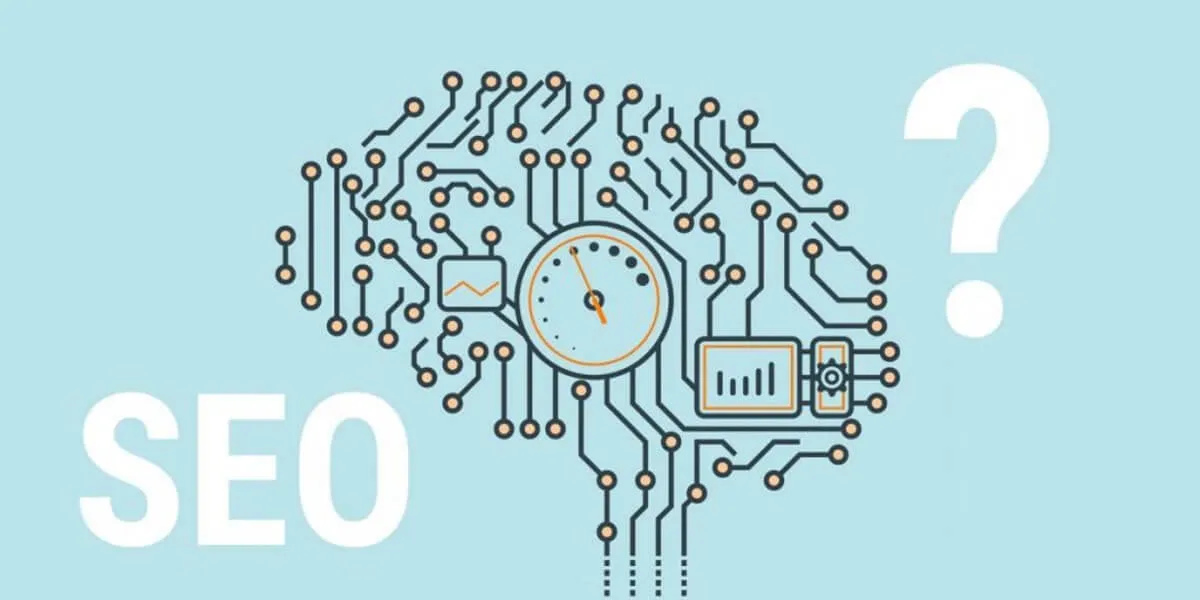
Self-teaching algorithms have made search engine optimization (SEO) more abstract and harder to learn. It is more difficult to take a good position in the ranking and attract readers, and so also to win customers through content marketing.
However, innovation brings challenges and gives great opportunities to those who are ready to learn the new technology. Artificial intelligence makes search more human. In 2018 search did not yet “speak” to users the way the Google Duplex demo did, but its purpose was very similar. By 2026 it does: AI Overviews answer in full sentences at the top of the results, and AI Mode, launched in the US in May 2025, works as a conversation.
Google’s RankBrain, launched in 2015 as its first deep learning system in Search, uses machine learning to understand the meaning of the content it searches and how the words in a query relate to concepts. In other words, it listens and learns. Google kept adding models after it: neural matching in 2018, BERT in 2019, MUM in 2021 and the Gemini models behind its AI answers. Artificial intelligence now sits at the center of search, as it already did in 2018 in products such as Google Photos and Google Lens, and the pace keeps accelerating because AI gives people better, more personalized results.
This guide is about the practical side: using AI in your own SEO work. The bigger picture of AI and SEO, meaning how AI changed search itself, is a separate post.
AI can optimize the content strategy
One of the biggest challenges of content marketing is answering key questions such as: “What kind of content do my clients really want?”
The traditional strategy is to research and develop buyer personas. That means meeting customers, building profiles and making assumptions about what a given group wants. A marketing team that invests a little more can even interview its audience and ask directly, but unless it interviews thousands of people, it has to hope that a small group represents the whole, diverse market.
Artificial intelligence promises to answer these questions better than before, with less guesswork. By analyzing website traffic, email engagement and social media behavior, AI helps build a more detailed profile of your target audience and what they like.
Search data works the same way. A model can read thousands of queries from Search Console and group them by intent, or turn the People also ask questions and forum threads around a topic into a list of what readers actually want to know. A person still decides which of those questions the business can answer better than anyone else.
How does artificial intelligence help in SEO?
Artificial intelligence can help in three areas: SEO strategy, automation and personalization.
Can AI do your SEO for you? Partly. It can do much of the analysis and the first version of most deliverables, but it does not know your customers, it cannot reliably check its own facts and it cannot take responsibility for what gets published. The useful split is the one below: AI for scale, people for judgment.
AI for SEO strategy
Artificial intelligence can process and interpret data patterns on a scale people simply cannot match. That makes it an essential complement to any search strategy, because it can turn noisy, unstructured data into the information needed for informed decisions. Common tasks where AI helps in search engine optimization include:
- Analysis of market trends.
- Website performance analysis.
- Competitor insights.
- Customer intent reports.
- SERP performance analysis.
- Managing SEO and pay-per-click budgets.
In each of these scenarios, AI can discover insights that would otherwise go unnoticed. As search goes beyond the traditional SERP and becomes a multichannel discipline, this keeps growing in importance. Solutions such as visual search show the central role of AI in processing new media types.
Artificial intelligence can be used in SEO strategy in many ways. It organizes data so that customers’ needs are easier to identify. It shows where you can compete with other companies. And it helps you give users better content.
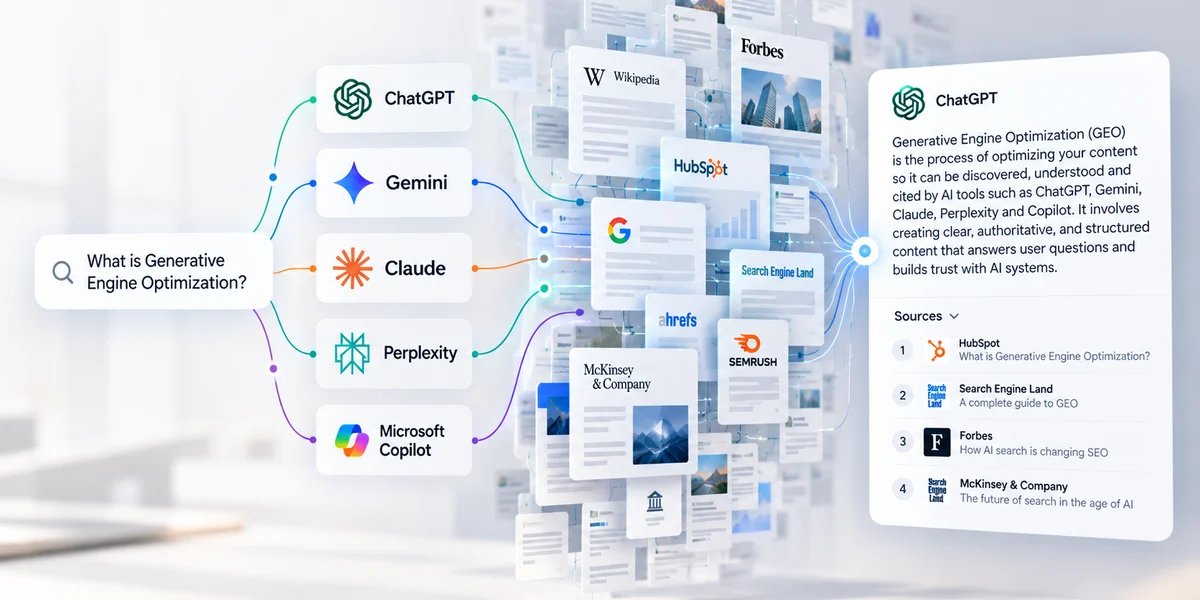
In 2026 the strategy also has to cover AI answers. According to an Ahrefs study from March 2026, only 37.9% of the pages cited in Google’s AI Overviews also rank in the organic top 10 for the same query, so keyword positions no longer tell the whole story. Search Console’s Generative AI performance report, available to all sites since 31 August 2026, shows how often your pages appear in AI Overviews and AI Mode.
AI for SEO automation
SEO is a labor-intensive field that needs constant attention over the long run. Where we can automate tasks and get the same results we would produce ourselves, we should make it a priority. Time saved by automation can go to the areas that need our skills, such as strategy and creative content. Here are some of the tasks that are ready for automation in SEO:
- Technical audits.
- Keyword research.
- Content optimization.
- Content distribution.
- Tag management.
- Internal linking.
The logical decision is to hand such tasks to artificial intelligence. That frees up precious time for the more difficult parts of SEO strategy.
How do you start using AI for SEO automation? First, divide the work into the smallest tasks and assess each one’s potential for automation. Then automate the simplest and most time-consuming tasks first, without losing the balance between human work and automation. It is also worth focusing on user experience, speed monitoring and alerts, because engagement keeps growing in importance.
Practical ways to use AI for SEO
Start where the traffic is. The 80/20 rule in SEO says a small share of pages and queries brings most of the results, so sort Search Console by clicks and point AI at those pages first, not at the long tail. Then work through the tasks where AI saves the most time:
- Keyword research and clustering. Export queries from Search Console or a keyword tool, then ask a model to group them by search intent and suggest which page should own each group. Take search volumes from the tool, not from the chat: a language model has no reliable volume data.
- Content briefs. Give the model the headings of the top-ranking pages and the People also ask questions, and ask which subtopics they all cover and which they miss. The gap is your angle.
- First drafts and rewrites. Use AI for structure and a first draft, then add what it cannot know: your data, your examples, your opinion. Check every number and name, because generative models predict likely words rather than retrieve facts.
- Titles, meta descriptions and alt text. AI writes good variants for hundreds of pages in minutes. Review them like any other text; Google’s guidance on AI content names titles, descriptions, structured data and alt text as things to check before publishing.
- Internal linking. Give the model your URLs with their topics and ask, page by page, which other pages really continue the thought and with what anchor text.
- Technical audits. Crawlers find the issues; AI sorts hundreds of warnings by impact and turns them into plain-language tickets for developers. Search Console itself now has an experimental AI-powered configuration in its Performance report, which builds filters and comparisons from a sentence such as “compare traffic for my blog pages this quarter with the same quarter last year”.
- Structured data. A model can draft Schema.org markup from a page’s content in seconds. Validate it before publishing. Google says its AI features need no special schema, but correct markup still earns rich results.
- Content refreshes. Find pages that are losing clicks, have AI compare them with what ranks now, and update what is outdated instead of writing a new page on the same topic.
- Checking AI answers. Ask the assistants your customers use the questions you want to be found for, many times, and record which brands and pages they cite. One run proves nothing: in a SparkToro study published in January 2026, the chance that ChatGPT or Google’s AI returned the same list of brands twice was under 1 in 100.
What to keep human
Google does not penalize content for being written with AI. Its February 2023 guidance says it rewards high-quality content “however it is produced”, and treats automation used mainly to manipulate rankings as spam. Since March 2024 its policy on scaled content abuse covers many pages generated to manipulate rankings, whether they were made by automation, by people or by both.
Its guidance on generative AI content asks for accuracy, quality and relevance, a manual fact-check of everything before it is published, because models can produce confident errors, and context for readers on how automated content was made. Online shops have a firm rule on top: Google Merchant Center requires AI-generated product images to carry IPTC metadata marking them as made by an algorithm, and AI-generated product titles and descriptions to be labeled as such.
In practice four jobs stay with people: deciding what to publish and why, adding first-hand experience and data, checking every fact, and owning the result. AI that does the rest is a large saving. AI that also does those four is how a site ends up with hundreds of pages nobody needs.
AI for personalization
Personalization lets marketers create relevant, useful experiences for each customer. Doing it at scale requires technical help, and artificial intelligence is an integral part of that process. Content discovery is no longer limited to the search results page, so marketers need to understand their customers well enough to reach them anytime and anywhere. Artificial intelligence matters at every stage of the journey. Predictive analytics, which forecasts from patterns in historical data, can help marketers plan content that meets customers’ needs.
In 2018 everything pointed to SEO becoming more resourceful in the coming years, but also more complex, forcing specialists to build strategies with more types of content, devices and tools, and that is what happened. Whatever combination of elements you use, focus on the user and their needs, because machine learning and artificial intelligence keep reshaping ranking factors to reflect what users need and expect. Most AI systems are invisible, but that does not make their work any less important. Search keeps changing, and people create vast amounts of data, all of which can be turned into insights.


 Any questions? Let's talk!
 Write to us,