
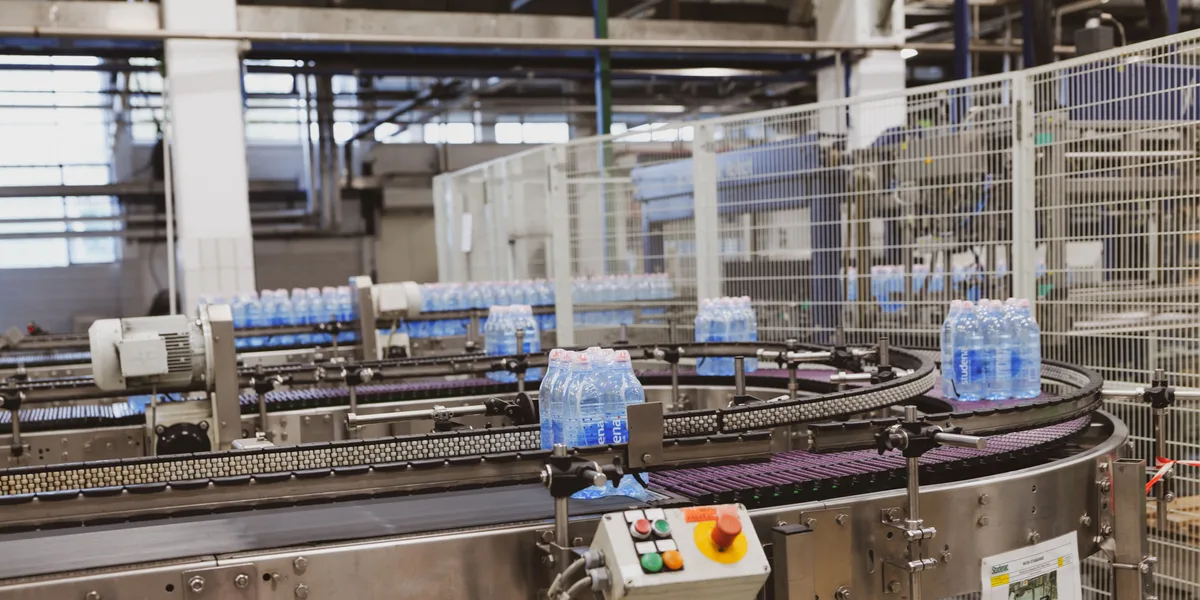
Many industrial pioneers already use machine learning, deep learning, natural language processing and other technologies to run and develop their operations. The term industrial AI is used for AI applied to physical operations: factories, warehouses and utilities, where a decision can affect safety, uptime and output, and where models often have to run next to the machines.
Artificial intelligence will affect almost every industry, even those far removed from technology. Manufacturing comes first here, because its results are the easiest to measure.
New opportunities
Artificial intelligence has been a field of research since 1956, when the Dartmouth workshop proposed by John McCarthy gave it its start. Since then hardware and software have become far more efficient, and computing power and data transmission have grown. AI creates new possibilities for flexible, efficient production, even for complex and increasingly customized products made in small series.
The first practical uses in ordinary industrial work were simple tasks such as speech recognition. Since ChatGPT appeared in November 2022, large language models have added a new layer: assistants that answer questions from manuals, write reports and draft code for machines.
How AI in manufacturing works
Whatever the use case, an AI system in production follows the same loop:
- Data: sensors, cameras and X-ray images on the line, signals from PLCs and SCADA, records from MES and ERP systems.
- Model: trained on that history, with machine learning for sensor readings, computer vision for images and language models for documents.
- Decision: made next to the line, at the edge, when milliseconds matter, or in the cloud when planning the week ahead.
- Action: a product goes to the bin, a work order is raised or a production plan changes.
- Feedback: operators confirm or correct the decision, and the model learns from it.
At Milarex, a salmon processor, two neural networks look at every X-ray image: one trained on clean products, one on contaminated ones. When they disagree, the case goes to a person, and the operators’ marks on false alarms and confirmed detections keep training the models.
AI in manufacturing: the use cases that work
Most of the value comes from a handful of AI use cases in manufacturing:
- Quality inspection: AI algorithms help ensure the highest quality of products leaving the production unit, fast enough to raise productivity and profits. Computer vision checks surfaces and labels; on X-ray images, AI finds contaminants inside the product. At Milarex, detection rose from 62% to 99.9%, false alarms fell from 20% to under 1%, and the lines sped up from 1.2 to 2 m/s.
- Predictive maintenance: AI tracks machine wear and schedules repairs before a breakdown. Data collected on machine throughput and results also helps when developing strategies.
- Production planning: AI can optimize production processes across sites: at BRUK-BET, the Polish market leader in paving stones, one system plans production for every factory and line and accounts for what each line produced against the plan.
- Demand forecasting and supply chain: models combine sales history with outside signals to set production volumes and stock levels, and flag supplier risks early.
- Engineering and documentation: in November 2023 Siemens and Schaeffler showed Industrial Copilot, a generative AI assistant that writes PLC code from plain-language instructions and searches manuals to help maintenance teams find faults. Code written this way still has to be reviewed before it runs a machine.
- Safety: AI that monitors work makes production safer for the people in the plant, for example by spotting a person inside a robot’s working zone.
Robotics
Industry leaders still cannot agree on what the term “robot” covers. Experts understand robots as programmable machines that perform tasks, but no one can say exactly where the definition ends.
Today’s AI-driven robots do not have general intelligence, but they can solve problems and “think” to a limited extent. In factories, collaborative robots work next to people and mobile robots carry parts between stations.
Benefits of AI in manufacturing: what the numbers say
Manufacturers invest because the gains can be measured. In Rockwell Automation’s 2025 State of Smart Manufacturing Report, based on 1,560 respondents in 17 countries, 95% of manufacturers said they had invested or planned to invest in AI or machine learning within five years. Quality control was the top use case for the second year running, with 50% planning to apply AI to product quality in 2025, and 41% were using AI and automation to deal with skills gaps and labor shortages.
The typical benefits are less scrap and fewer recalls, less unplanned downtime, faster lines and plans that adapt when a machine fails.
How to start, and what usually goes wrong
- Pick one costly problem: a defect that reaches customers, a machine that stops too often, a plan that takes days to build. For some problems, simple rules are cheaper than AI.
- Check the data: models need clean, consistent, labeled records, and the most valuable events are often the rarest: a defect may appear once in thousands of products, a classic case of unbalanced classification.
- Test on your own products first: a pilot shows what the model catches and what it misses before anything is installed on the line.
- Connect to what you have: AI has to work with the existing machines, PLCs and MES, not replace them.
- Keep people in the loop: operators who confirm or correct decisions improve the model and trust it more.
- Measure: agree on the numbers before the pilot, such as detection rate, false alarms, downtime and line speed.
The usual obstacles are poor data, pilots that never scale beyond one line, cybersecurity once machines are connected, and generative AI that is not yet reliable enough to control a process on its own.
The impact of artificial intelligence on other industries
Outside the factory, the same techniques work in very different businesses.
Healthcare
Artificial intelligence is improving almost every part of healthcare, an industry long burdened by soaring costs and inefficient processes, from robot-assisted operations to protecting private data from cyber criminals. Virtual assistants reduce unnecessary hospital visits, and pharmaceutical companies search for life-saving medicines in a fraction of the usual time and cost.
AI and the automotive industry
Self-driving vehicles use sensors and AI to drive safely and avoid traffic jams and accidents. This also paves the way for a connected car system, in which cars exchange information, report breakdowns of other vehicles and change their routes to cut travel time.
The automotive industry is probably the biggest beneficiary of AI, but full autonomy has taken longer than expected. By October 2026, Waymo, which grew out of the self-driving car project Google started in 2009, serves riders in 15 US cities and reports more than 20 million rides. Tesla’s Full Self-Driving (Supervised) is still a driver-assistance system that requires an attentive driver.
Finance
Artificial intelligence increases the efficiency of the financial sector. Trained on historical data, it helps decide whether an investment is worth the risk and how markets may react to news. It separates legitimate from fraudulent transactions at a scale no human team can match, which reduces losses and protects a bank’s reputation, and it helps assess risk when granting credit.
Marketing
Marketing includes many operations that benefit from full or partial automation. The software used to plan campaigns and strategies is being transformed by AI, and generative models now draft copy and images for campaigns.
Cybersecurity through artificial intelligence
AI can analyze software systems and find vulnerabilities before unauthorized users exploit them, map relationships between IP addresses, malicious files and threats, and raise alerts about breaches in real time. In industry this matters more every year, because each connected machine widens the attack surface.
Recruitment and HR
In human resources, automation of the recruitment process through AI and machine learning is becoming increasingly common, as it takes less staff time and improves the search for candidates. Recruitment is long and time-consuming, and candidates often do not know where they stand. In the EU, the AI Act classifies AI used to recruit and select people, filter applications and evaluate candidates as high-risk, with extra obligations for those who build and use it.
Artificial intelligence for efficient logistics
Logistics companies always have to watch the route, time, fuel and load. AI takes over part of that management: it sorts products, calculates volume for efficient storage and optimizes routes to save fuel. It can also calculate how much a vehicle can carry and pack it with the exact quantity.
Travel and tourism
Artificial intelligence has become a trend in tourism. Travel companies benefit from the ubiquity of smartphones: travelers research and book trips on their phones, and look up local landmarks and restaurants there. AI chatbots answer customers faster and help with booking prices and travel recommendations.
Automation
During the COVID-19 pandemic, companies that had to move to remote work automated much more, and the habit stayed. From managing schedules and filtering e-mail to solving IT problems without on-site support, automation plays a key role in keeping employees productive and operations running.
The future of AI in industry
Artificial intelligence is a breakthrough technology for every industry. As it matures and costs fall, more companies use it to make rapid data-based decisions, minimize operating costs and serve their customers better. This does not mean that machines will take over industry: AI is an enhancement of human work, and nothing replaces human intelligence and adaptability when something unexpected happens.
Automation built on data and machine learning helps companies work efficiently in an environment that rarely stays normal for long, and the change may come faster than most of us expect.



 Any questions? Let's talk!
 Write to us,