
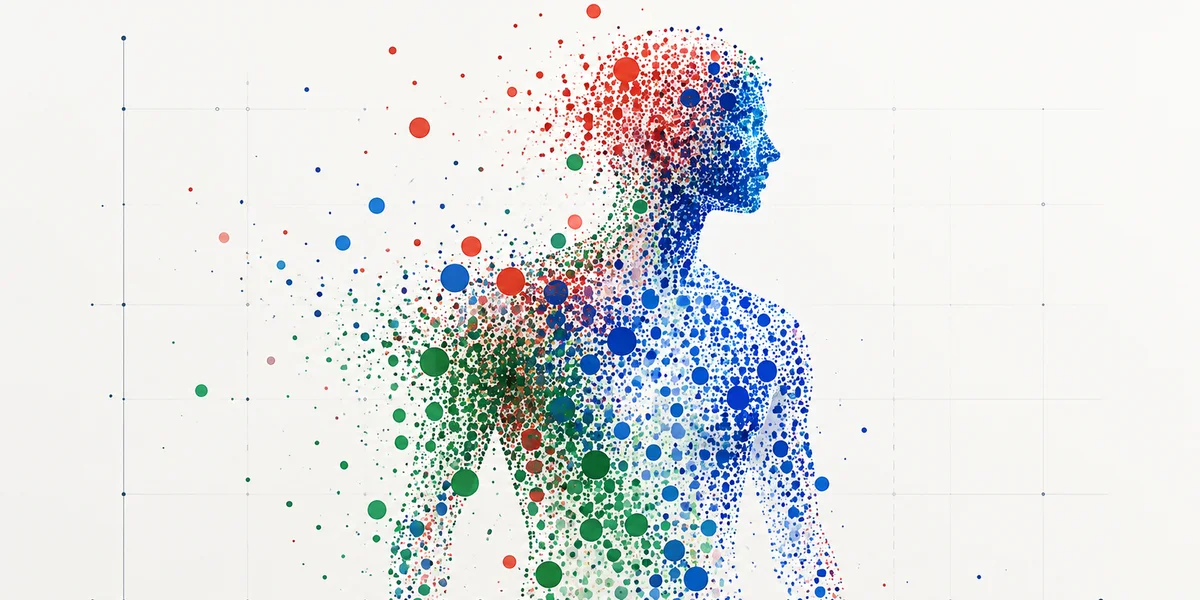
Today’s world is always chasing personalization. Personas used to be limited to simple segmentation, such as age and gender. With a deeper understanding of the subject, more data and better research methods, content and service providers can now engage clients based on what they actually do and want.
A persona represents a group of users who share behaviors, motivations, goals, pain points or other characteristics. Personas help keep key user groups in first place when making product decisions. Effective personas are created on the basis of research, to make sure they reflect the real people who use your product. They keep users at the center of the design process without anyone having to remember hundreds or even thousands of behaviors, motivations and goals of individual people.
A persona does not represent one specific user, but a synthesis of many users who share attributes that are significant to your process.
What user personas really are
Even the largest corporations struggle to understand the concerns and motivations of their clients. That makes the case for a tool such as client personas based on data and tests. In essence, personas are fictional representations of buyer segments based on real data reflecting their behavior. Their goal is to help people make decisions through the eyes of the client. The problem with many personas is that they rely on irrelevant data, poorly obtained data or no data at all. Some basic demographic data, such as gender and age, may apply, but very specific traits collected from anecdotes are useless.
Nielsen Norman Group defines a persona as “a fictional, yet realistic, description of a typical or target user of the product.” The method comes from software design: Alan Cooper started sketching personas in 1983, based on informal interviews with a handful of users, and made them popular in 1999 with his book The Inmates Are Running the Asylum.
A user persona and a buyer persona are not the same thing. A user persona describes who uses the product and guides design and feature decisions. A buyer persona describes who makes the purchase and guides positioning and messages, so it is the tool marketers use to target the right audience. “Customer persona” can mean either. The difference matters most in B2B, where the person who uses a tool every day and the manager who signs the contract want different things; keep both rather than merging them.
Why use personas?
Now that we know what personas are, let’s look at how they make the design and development process easier. We use personas to build better products by understanding our users and designing for their needs. Personas capture a large number of users and highlight the information about them that is key to making meaningful decisions about your products. Beyond a title or a role, they show users’ work behaviors and the tools they use to get their jobs done.
Personas are most useful for:
- Ending arguments about “the user”. Without personas, everyone defines the user to suit their own idea; Cooper called this the elastic user. A named persona gives the team a shared vocabulary.
- Stopping teams from designing for themselves. Designers and developers are rarely typical users.
- Deciding what to build first: a feature that none of the main personas needs can wait.
- Writing scenarios and test tasks that show how each persona would use the product.
- Recruiting participants for usability tests and briefing agencies or new team members.
- Segmenting analytics on a live product, to check whether each group behaves as expected.
Spotify showed in 2024 how far this can go. Its analytics platform team found the label “data practitioner” too broad to guide product decisions, so it built six personas, such as Paola the Product Strategist and Sigrid the Systems Engineer, from in-depth interviews and clusters in usage data. A daily dataset now assigns every internal user to a persona, and the team uses it for recruiting and to split key results by persona.
Types of personas
What are the four types of personas? The most quoted answer comes from the researcher Lene Nielsen, who describes four perspectives:
- Goal-directed personas: what the typical user wants to do with the product and the workflow they would use to get there. Based on Alan Cooper’s work.
- Role-based personas: also goal-directed, built from qualitative and quantitative data, and centered on the user’s role in an organization or in wider life.
- Engaging personas: they use storytelling, emotions and background to make the persona feel like a real person, so that designers empathize with it.
- Fictional personas: drawn from the team’s assumptions and experience, not from research. Useful as an early sketch, never as the only basis for development.
Nielsen Norman Group sorts personas by the research behind them. Proto personas need no new research: a two to four hour workshop turns the team’s existing knowledge into three to six personas, which then serve as hypotheses. Qualitative personas come from interviews with about 5 to 30 users and suit most teams. Statistical personas start with qualitative research, add a survey of at least 100 people (ideally 500 or more) and use clustering to show what share of users each persona represents; they are accurate but expensive.
What a user persona looks like
Personas can take many forms, but in the end their usefulness lies in how clearly they show what drives different types of buyers of your products or services. There are many templates and examples to follow on the Internet, but build your personas from the qualitative and quantitative research you have, focusing on:
- Behavioral drivers - they cover your clients’ goals, what they want to achieve and their journey to find your company.
- Obstacles in the purchase - the doubts and concerns of customers. How do they perceive your product or service, and how does that affect the amount of information they need to make a decision?
- Mindset - your clients come to shopping with expectations and preconceived notions. Do they want emotions in the transaction, or a more sophisticated experience? Selling a slimming program is more emotionally charged than, say, selling routers.
Most persona sheets also carry a name, a photo or illustration, a one-line description, the persona’s experience with the product, the context of use (device, how often, whether they choose to use it or have to) and a short quote that captures their attitude. Providing people’s names and faces is less important than ensuring that they are based on real people and not on stereotypes.
Here is a short, made-up example for an online shop’s email tool. Marta, the evening marketer: she runs a small ceramics shop alone and does marketing on her phone after the shop closes. Her goal is one newsletter a week in under an hour. Her pain point is tools built for marketing teams, full of options she never uses. Her quote: “I don’t need more features, I need fewer decisions.” A team designing for Marta will cut setup steps before it adds new reports.
Characteristics of a good persona
Use this checklist to review each persona before you present them to the business, and note what is good and what could be improved about the way each one was built:
- They reflect patterns observed in research: every trait can be traced back to interviews, surveys or data.
- They focus on the current state, not the future: they describe how people behave today, not how you hope they will.
- Realistic: believable enough that the team talks about them as people.
- Help you understand users’: Context, Behaviors, Attitudes, Needs, Challenges/pain points and Goals and motivations.
Keep each persona lean. Research by Chapman and colleagues in 2008 showed that the more attributes a persona description has, the fewer real people are likely to fit it. Most teams need three to five personas; more than seven usually means you have described segments, not personas, and a single persona often means the team is still designing for a generic user. Choose one primary persona for each product or project.
How to create user personas
First, ask questions to understand not only the different segments that make up your customer base, but also what motivates them. Some of the most valuable ways to do this are:
- Customer surveys - online or offline surveys with open questions are crucial to understanding how your customers see their motivations and needs. The goal is to get inside the client’s head, so that your personas are based on what real people think, not on what you think. Around 10 questions designed to get insights on behavioral drivers, purchase obstacles and mindset are enough. The questions will differ from company to company, but the goal is always the same: useful information that serves your needs.
- Telephone and personal interviews - talking with existing clients gives valuable information about shopping habits, motivations and the words they use to describe a product or service. Interviews are labor-intensive, but the answers are informative: you can ask respondents to explain more, and get details that surveys never show.
- Internet and exit questionnaires - the question to ask depends on the overall purpose. Do you want to know whether your site or products meet visitors’ needs? Or do you want to understand what sources of friction stop customers from buying? Experiment with your questions to see which bring the most useful answers.
- Analytics, support tickets and sales calls - they show what people actually do and complain about, and they help you check what interviews tell you.
Then turn the research into personas:
- Define the purpose: which decisions should the personas support (a redesign, a new feature, a campaign)?
- Look for patterns in the research and group people who share goals and behaviors, not only demographics.
- Decide how many personas you need, merge groups that are too similar and drop those that matter less.
- Write each persona with only the details that affect design decisions, and give it a name.
- Write scenarios for each persona: how they would reach their goal with your product.
- Share the personas with the whole team and the people behind the data, and review them every six to twelve months or after a major change in the product or the market.
A customer persona is a tool, and every tool is only as good as the people who use it. Personas can give great insight into how to create better user experiences, more convincing copy or pricing models. The key is to build them from the data that serves the goals you want to achieve.
Remember that personas are a synthesis of many users and reflect the features of real people, with their real motivations, desires and fears, not stereotypes. If you stop focusing on people, your personas will be fake and will not bring the expected results.
AI personas and synthetic users
Is there an AI persona creator? Yes, many persona tools now draft personas with a large language model in seconds. Use them with care. Nielsen Norman Group compared such synthetic users with real ones in 2024. In a study on online courses, most real participants said they didn’t use course forums, while the synthetic users said they took part and valued them. In concept tests, the AI liked almost every idea. Its answers reflected idealized behavior and training data, not what people actually do.
The authors see a place for AI-generated personas in desk research, in drafting proto personas and hypotheses, and in preparing interview guides, but not in final decisions or in place of research with real people. Data-driven personas are a different thing: they cluster real behavior from analytics or customer data, an approach McGinn and Kotamraju proposed in 2008 and close to what Spotify did. Whatever the source, a persona is only worth what its data is worth.
Where personas fail
Personas fail in predictable ways: they are built from assumptions and point the team confidently in the wrong direction, they collect trivia nobody needs, they go out of date while still looking authoritative, or they hang on a wall and change nothing. A quick test is to ask the team which decision a persona last changed. If no one can say, rebuild it from current evidence or retire it.



 Any questions? Let's talk!
 Write to us,