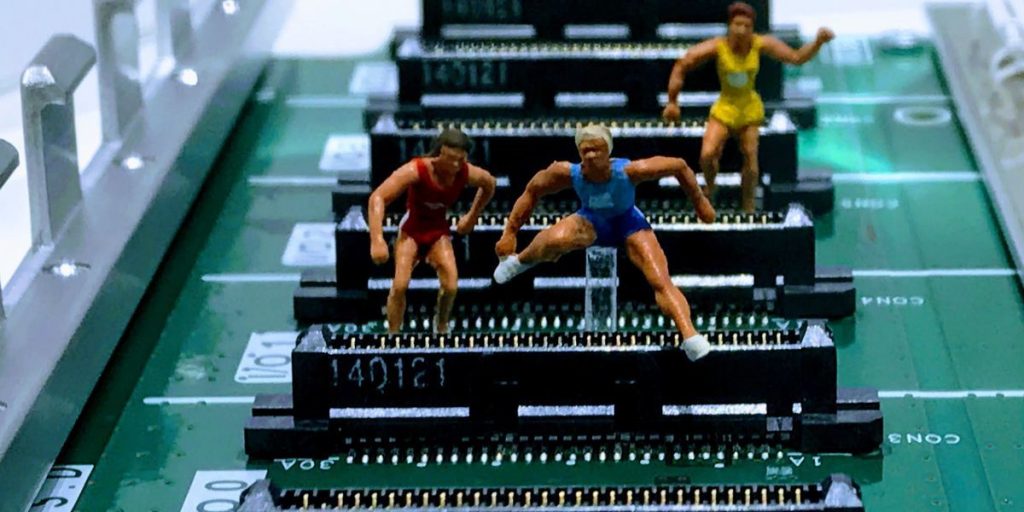
The potential of mathematics in sport was shown a few years ago in the movie “Moneyball”, which was based on the true story of a baseball team using mathematical tools to improve sports performance. Elite athletes around the world are increasingly relying on sophisticated mathematical data to evaluate and improve the personal performance and performance of the necessary sports equipment. From analyzing human movements to body responses to exercises, a thorough understanding of the mathematical techniques used is essential. Analysis of sports data also affects team tactics. More and more trainers are using statistics and conclusions from data analysis. Even The largest sports teams base their results on these analyzes.
Data science in sport
The sports industry generates annually revenues of almost 100 billion and it is full of various statistics – the probability of winning, the number of points, the exact result, the effectiveness of given players and many others. Sports analyst builds predictive models based on a number of data. But Sport Science combines statistical analysis with programming knowledge. The first team using data science in the history of professional sport was the MLB baseball league team – Oakland Athletics, on which the film Moneyball was based. This team was a league and won many games with many underrated players. This is due to advanced data analysis. The American basketball league – NBA, has revenues worth about $ 5 billion a year.
The contracts of the best players already reach almost 50 million dollars a year, and this is their earnings only from the player’s salary (the best get the same or more from advertising contracts). In this league you play for a really big stake. Since 2013, most NBA teams have data analysts in their team. They work with coaches and players to maximize the players’ talents. They use the data collected from each match or training. Each sports hall of the NBA team has cameras that record games, and then from these cameras analysts can extract the locations of players on the field. Through this they can learn how to effectively pass or throw players after previous games. One of the teams in this league – Houston Rockets – based their tactics to a great extent on the conclusions of the data analysis. They give only two types of the most profitable throws by. analysts
However, data analysis can also have a negative impact on players. If their statistics are not very good, they can expect that this will be used when negotiating a new contract.
What is Sport Science?
Sport science is a relatively new thing, gaining popularity and more
and more fans every year This is
an interdisciplinary subject, using such areas as:
• physiology and biomechanics, to measure what is happening in the athlete’s body;
• psychology to analyze the role of the mind in performance;
• nutrition to help athletes properly power their bodies;
• business and sport management to understand the financial and operational aspects of the sports industry
Sports science is a combination of several different disciplines that focus primarily on the scientific basics of doing exercises. Its main purpose is to understand the relationship between exercise and the human body, from the cellular level to the impact on the body as a whole. The majority of sports science graduates are in the competitive sports industry, because the competition for new achievements in various sports disciplines is still intensifying.
What technology do they use?
In the world’s major leagues, data science is based on:
• SQL databases
• R and Python programming languages
• data visualization tools such as Shiny or Tableau
However, one of the most interesting things is creating and adapting technologies for data collection and visualization. The NBA League has 6 cameras installed on each hall to track players and referees at 25 frames per second, all of it to get as much analytical data as possible for the teams and the league itself. Thanks to this technology, games can be tracked and analyzed for training personnel to adjust defensive and offensive strategy based on the team or star they will play with. The data gives the team an advantage in adapting the game and effort to the health of the opposing team and the individual player. This technology helps determine where the player gives his best throws. Since next year, similar technologies will be used by one of the largest football leagues, i.e. the Italian A Series, which has a contract with Math and Sports – a producer of special data analysis software called Football Virtual Coach. Each coaching staff will have a special tablet giving them detailed analytical support during matches. It allows trainers to provide exclusive information stream, which is constantly updated. In this way, the league wants to improve the quality of the show and increase the success of their teams.
Predictive analysis in sport
Predictive analysis allows you to provide information on what composition should come out in the next match. It allows you to estimate which player increases the probability of winning a team. Machine Learning models are used for this. The model will be built on the basis of the player’s statistics as the basis and such variables as statistics in the last match against this opponent, and the form in home or away game.
That’s how it’s done:
- Player Analysis – We can improve the performance of each player on the pitch by analyzing their training pattern and dietary table, and then refreshing the results of the analysis.
- Team Analysis – Using team statistics, we can build state-of-the-art machine learning models, such as deep neural networks, SVMs, etc., to help team management calculate winning combinations with their probabilities.
- -Fan Management Analysis – Knowing the factors that attract the most fans, team management can focus on improving this aspect, leading to a new fan base and retaining older fans.
Advanced data visualization
Data visualization is a key tool in today’s data-focused world, and sport is no exception. Using raw data in tabular format, the coaching staff cannot get a clear view and with all the data reviewed and conclusions captured it will take a long time. So presenting data in a graphical format allows managers to visually see analysis presented in graphs and charts, so they can capture difficult concepts or identify new insights. The next step to graphical representation is interactive visualization. Such technologies as Tableau, Clickview or Rshiny are used for this purpose.
The world of sport gambling.
Not only does sports analytics have a huge impact on sporting events, but it has also contributed to the development of the sports gambling industry, which accounts for around 13% of the world’s gambling industry. Valuable between 700 and 1000 billion dollars, sports gambling is extremely popular among a variety of groups, from keen sports fans to recreational players, it would be difficult to find a professional sports event where nothing would affect the results. Many players are attracted to sports gambling because of the wealth of information and analysis available to them for decision making.
How does Data Science change sports?
Whether it’s the Olympic Games or any kind of World or European Championship, the Champions League or the American NBA, NFL, MLB leagues, this sportevents attracts billions of people. Sport is full of confusing and uncontrolled variables such as weather, unique phychology of individual players, referee decisions and choices made by players during a game or match. Due to the continuous advancement of Big Data analysis technology, the acquisition of sports data is relatively easy. This is where data analysis and data science comes in and reveal predictive insights for optimal decision made across the entire sports industry.
Analytics helps to measure other elements during a sporting event, such as ticketing, fan engagement, fan interaction and, more importantly, fan retention rates. The return of fans to the stadium is a key element, and analytical methods are becoming a major trend to measure these perspectives. This helps to make it happen through the use and innovation of technologies and the adaptation and combination of the two trends in the sports industry. Over the next 10 years, the sports industry will certainly be different and more sophisticated from an analytical point of view. It is not clear how players, coaches and fans will react to different methods, approaches and analyses. For now, methods, trends, analyses and other innovations improve the viewing experience and provide athletes with better results.